 |
Bacteroides Testing |
 |
| Home |
Sewage / Fecal Contamination in Water & Buildings
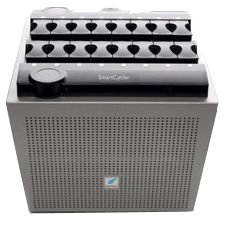
Environmental health & safety professionals are frequently asked to determine if fecal contamination exists after sewage overflows, and after flooding from storm events. Many have used the traditional fecal indicator bacteria tests (FIB) that culture total coliforms, fecal coliforms, E. coli, or Enterococci for these applications. Even though it is widely recognized that these tests are neither specific nor sensitive enough to be considered good indicators of fecal contamination, they were the only tests available until recently. With the commercialization of Polymerase Chain Reaction (specifically quantitative Polymerase Chain Reaction or qPCR), genomic testing and additional research on using other fecal indicator organisms, we now have more sensitive and specific tests for determining the presence of fecal or sewage contamination.
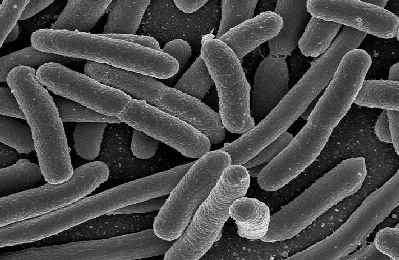
Feces contain an extraordinary amount of microorganisms: bacteria, viruses, protozoans, and helminthes—some of which are pathogenic. However, it is not technically possible to culture every type of pathogenic organism that exists in feces and it would be prohibitively expense to do so. Because the traditional culture dependent tests for FIBs are easy and cheap, they have been used more than 60 years as indicators of the possible presence of pathogens in feces. Nonetheless, the scientific community has recognized for quite some time that serious limitations exist when these tests are used as strict indicators of fecal contamination in water samples.
These limitations are compounded when culture FIBs are used for surface or bulk sample analysis in indoor environments. The Environmental Protection Agency (EPA), US Geological Survey (USGS), and numerous researchers worldwide are conducting research on new indicator methods using rapid methods rather than culture tests. The most promising to date has been the use of qPCR technology to test for total Bacteroides, human Bacteroides, and human Polyomaviruses (HPyVs), which have proven to be highly specific and sensitive for this application.
According to a 2006 study by Dr. Shannon McQuaig at the University of Florida, no association, or at most a weak one, exists between the presence or absence of these new indicators and the counts of culture FIB tests. In other words, culture FIB tests have a high percentage of false positive and false negative results, while Bacteroides species are highly specific for fecal contamination, and HPyVs are highly specific for human fecal contamination.
Environmental health & safety professionals are frequently asked to determine if fecal contamination exists after sewage overflows, and after flooding from storm events. Many have used the traditional fecal indicator bacteria tests (FIB) that culture total coliforms, fecal coliforms, E. coli, or Enterococci for these applications. Even though it is widely recognized that these tests are neither specific nor sensitive enough to be considered good indicators of fecal contamination, they were the only tests available until recently. With the commercialization of Polymerase Chain Reaction (specifically quantitative Polymerase Chain Reaction or qPCR), genomic testing and additional research on using other fecal indicator organisms, we now have more sensitive and specific tests for determining the presence of fecal or sewage contamination.
Feces contain an extraordinary amount of microorganisms: bacteria, viruses, protozoans, and helminthes—some of which are pathogenic. However, it is not technically possible to culture every type of pathogenic organism that exists in feces and it would be prohibitively expense to do so. Because the traditional culture dependent tests for FIBs are easy and cheap, they have been used more than 60 years as indicators of the possible presence of pathogens in feces. Nonetheless, the scientific community has recognized for quite some time that serious limitations exist when these tests are used as strict indicators of fecal contamination in water samples.
These limitations are compounded when culture FIBs are used for surface or bulk sample analysis in indoor environments. The Environmental Protection Agency (EPA), US Geological Survey (USGS), and numerous researchers worldwide are conducting research on new indicator methods using rapid methods rather than culture tests. The most promising to date has been the use of qPCR technology to test for total Bacteroides, human Bacteroides, and human Polyomaviruses (HPyVs), which have proven to be highly specific and sensitive for this application.
According to a 2006 study by Dr. Shannon McQuaig at the University of Florida, no association, or at most a weak one, exists between the presence or absence of these new indicators and the counts of culture FIB tests. In other words, culture FIB tests have a high percentage of false positive and false negative results, while Bacteroides species are highly specific for fecal contamination, and HPyVs are highly specific for human fecal contamination.
|
|
For More Information Call Today: East Coast 1-800-220-3675 West Coast 1-866-798-1089 Ship your sample to: EMSL Analytical, Inc. - Bacteriodes Lab 200 Route 130 North Cinnaminson, NJ 08077 |
| Copyright ©2013 EMSL Analytical, Inc. |
|